Butcher block kitchen counters
I set out to replace a dishwasher and ended up replacing the countertops, sink, and dishwasher.
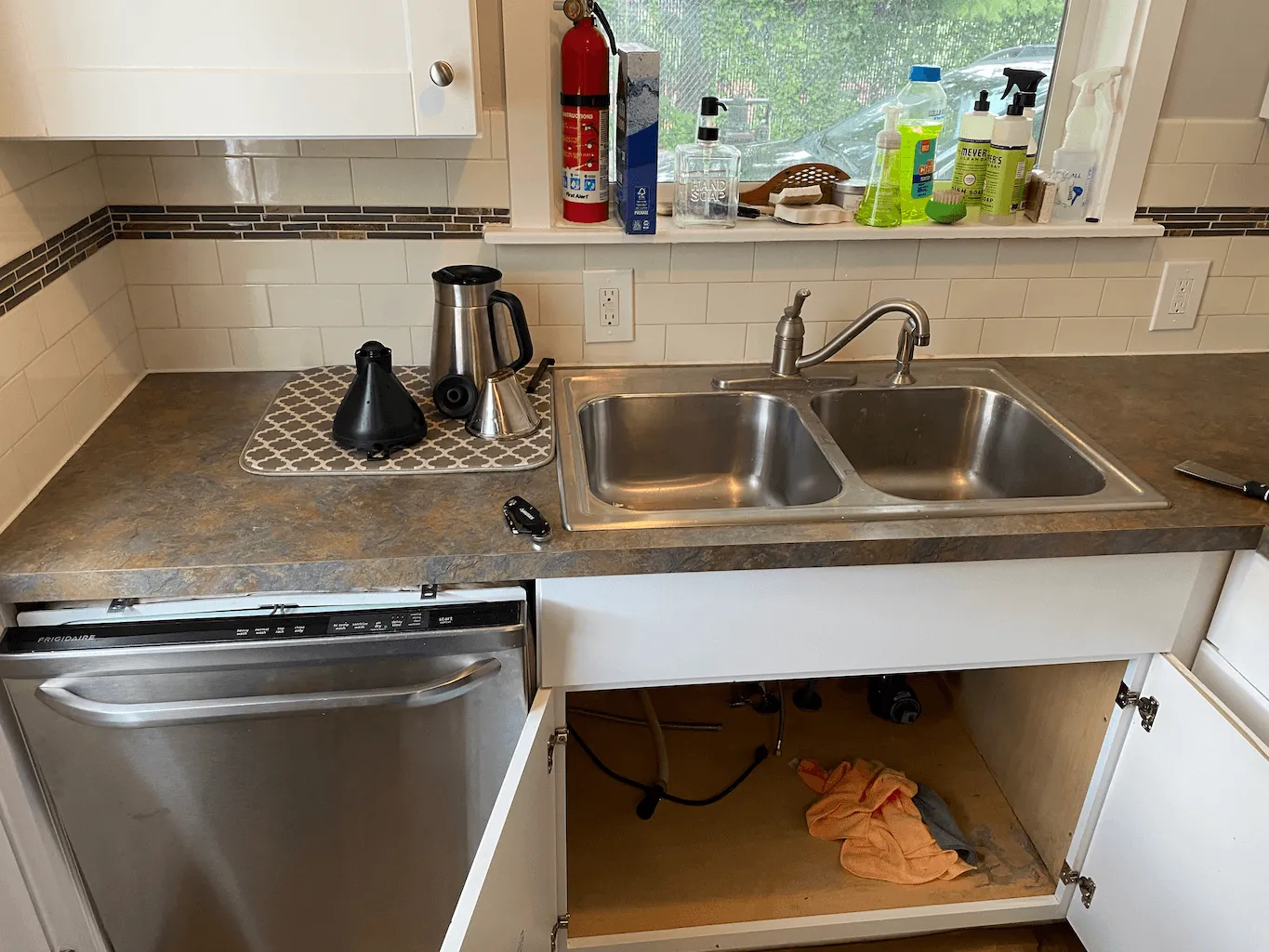
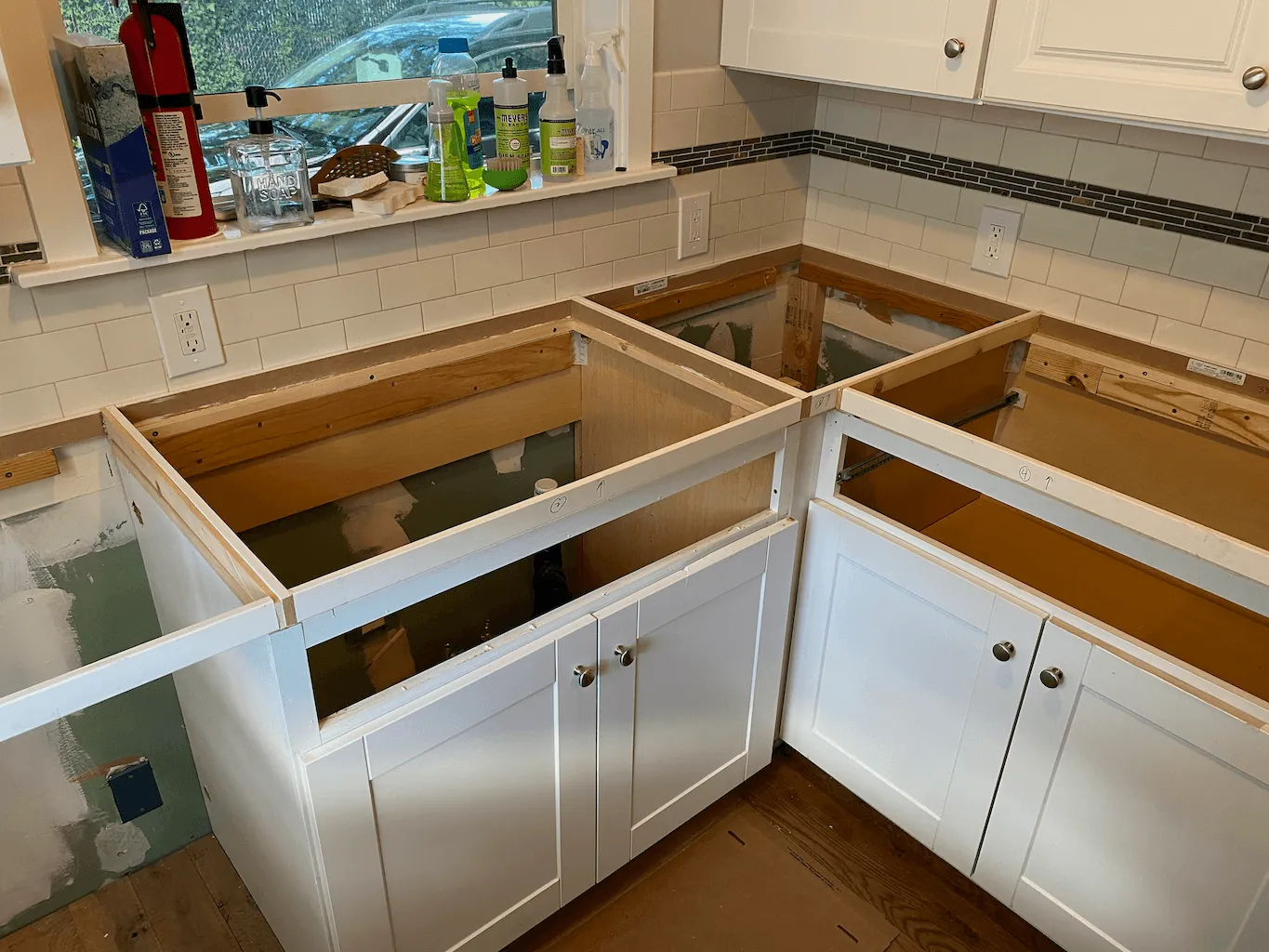
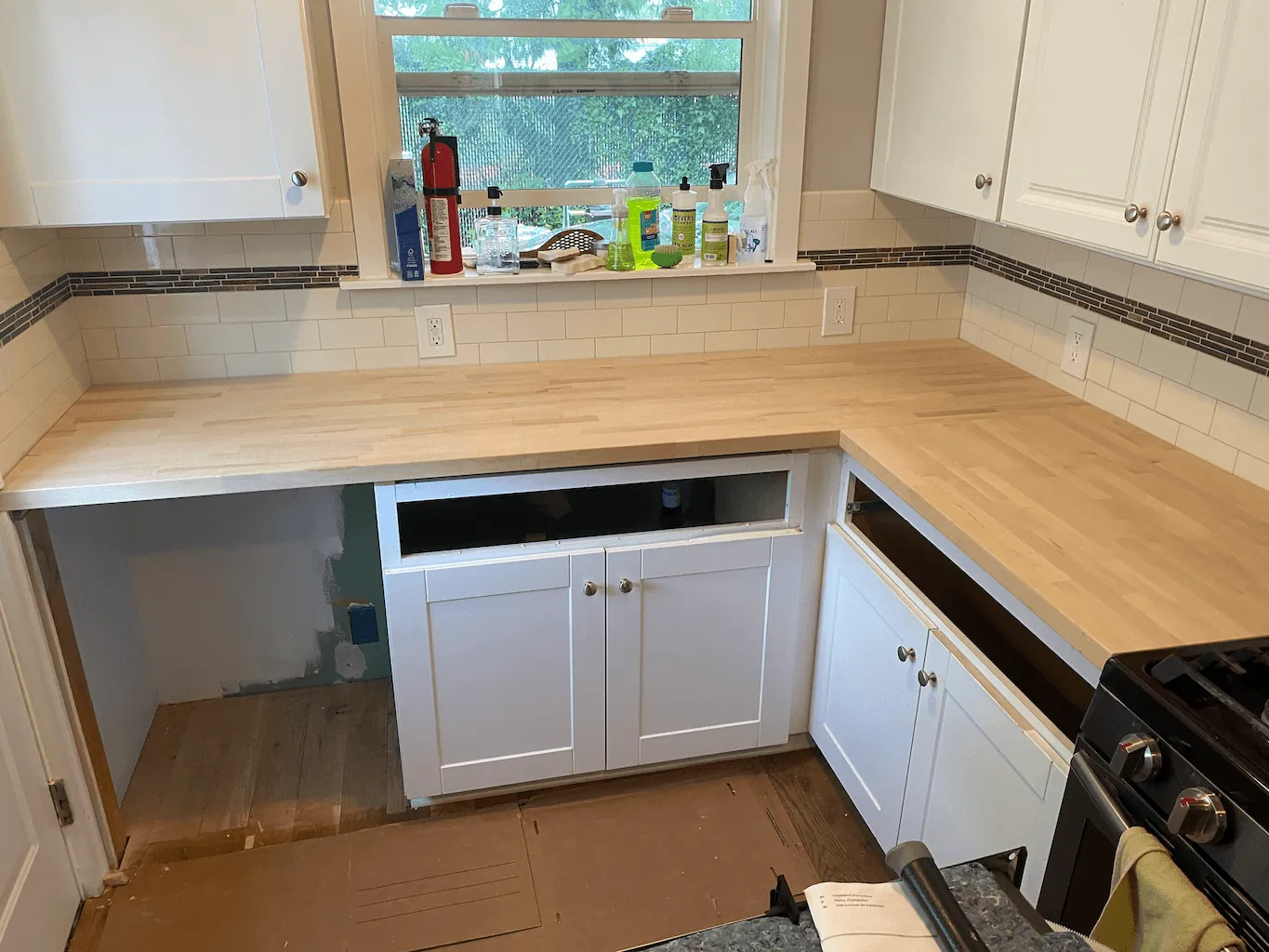
This one started small. After I bought my house and moved in, the first thing on my list was replacing the old dishwasher. Once I got into it, I found the old unit couldn't come out without removing the countertop. Since the counters had to come up anyway, I decided to replace them.
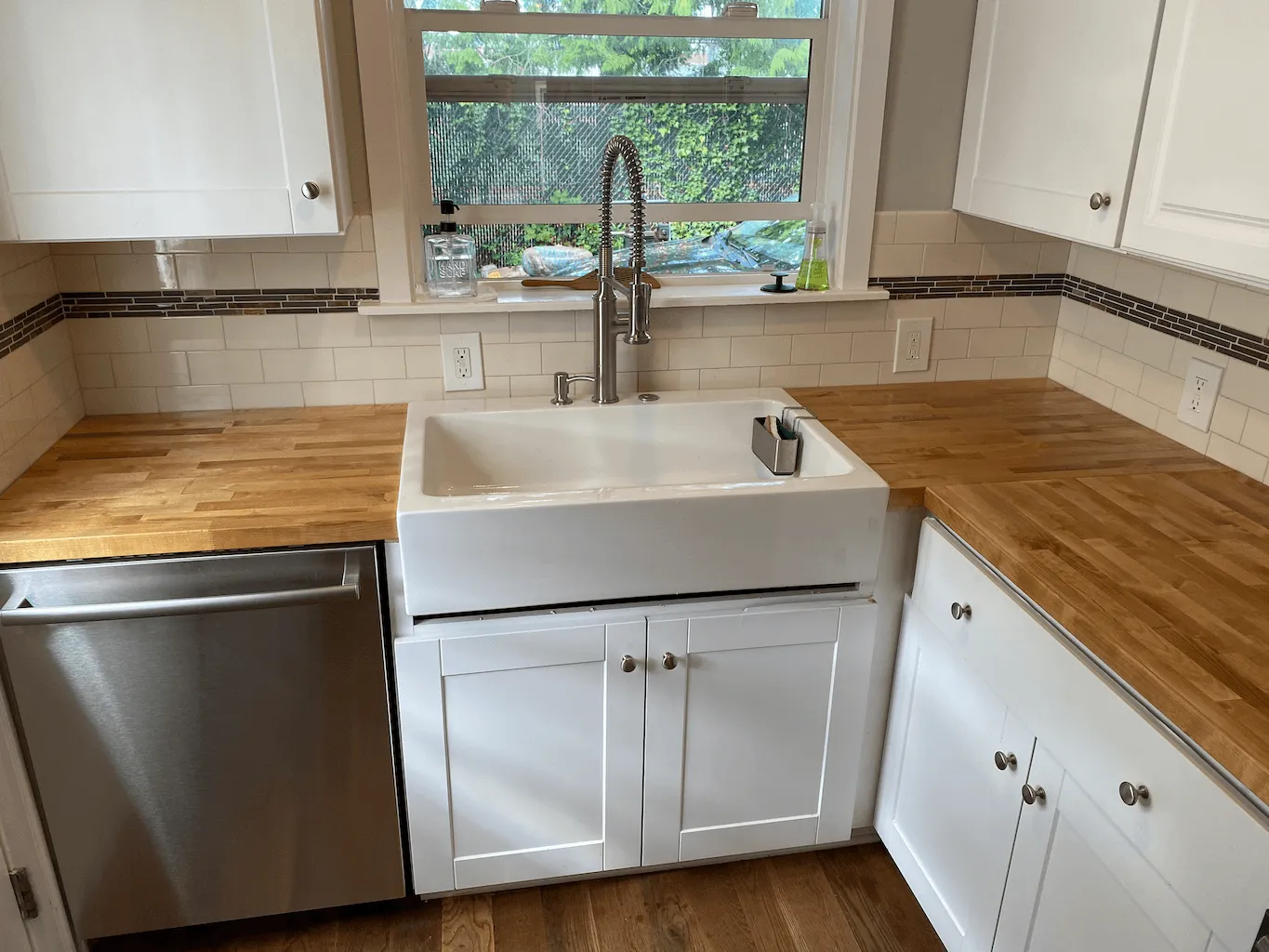
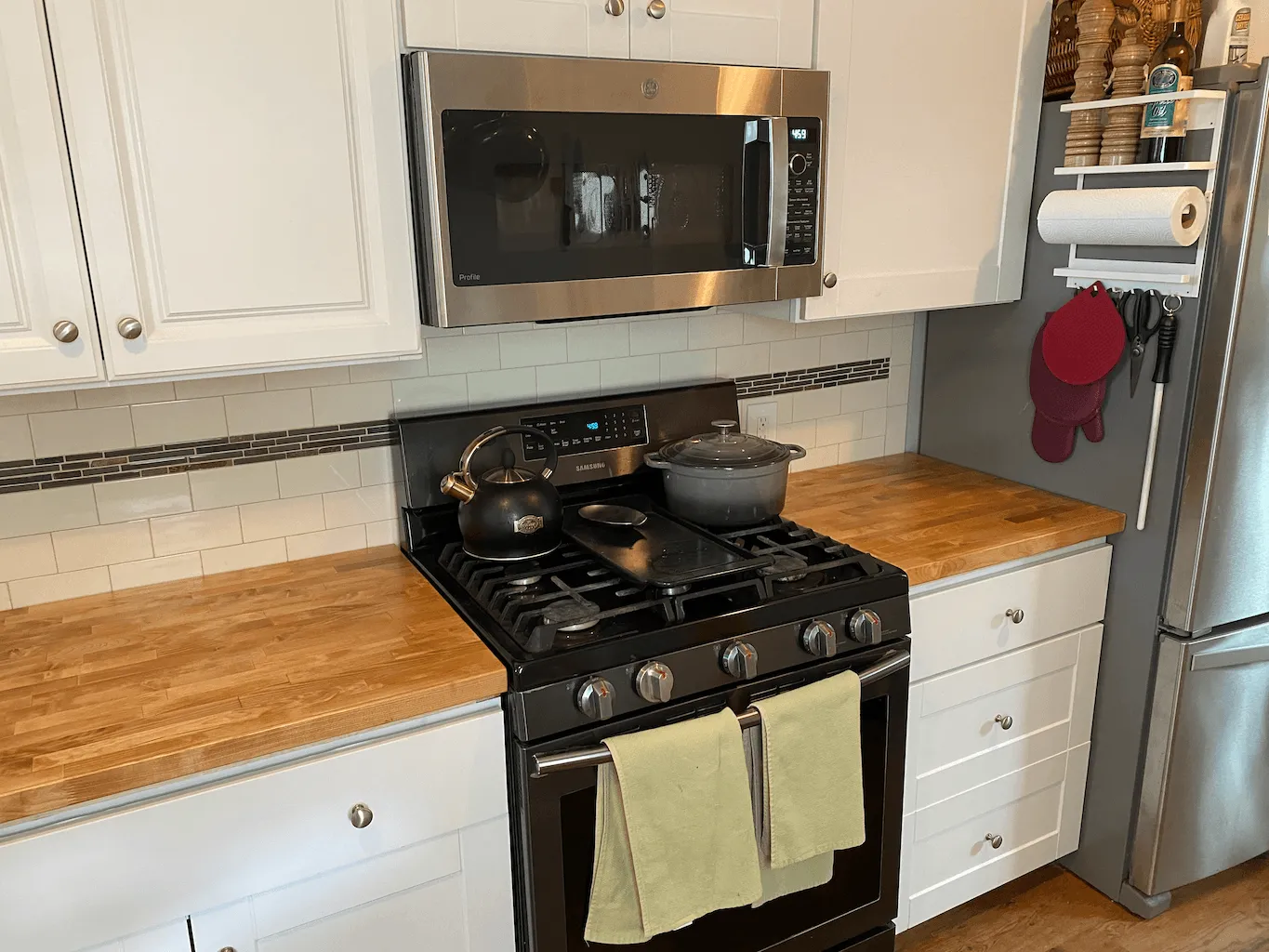
The cheap laminate went, and butcher block counters went in. I finished the wood surface with Waterlox Original sealer/finish, which is made from tung oil. Then, I installed a new farmhouse kitchen sink, with an industrial-style faucet, and the new Bosch dishwasher that started the whole thing. I also added a garbage disposal, which the old sink did not have.
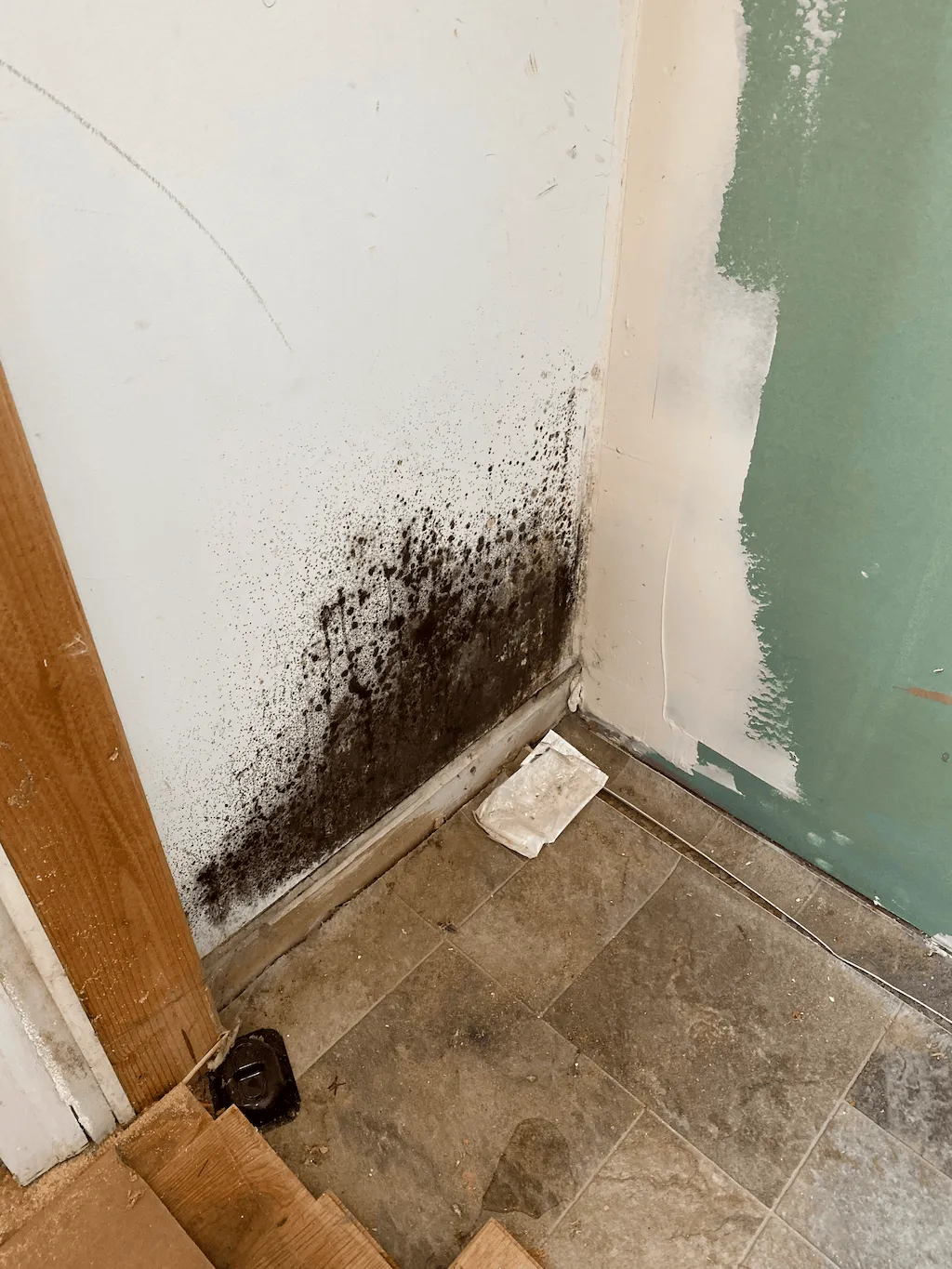
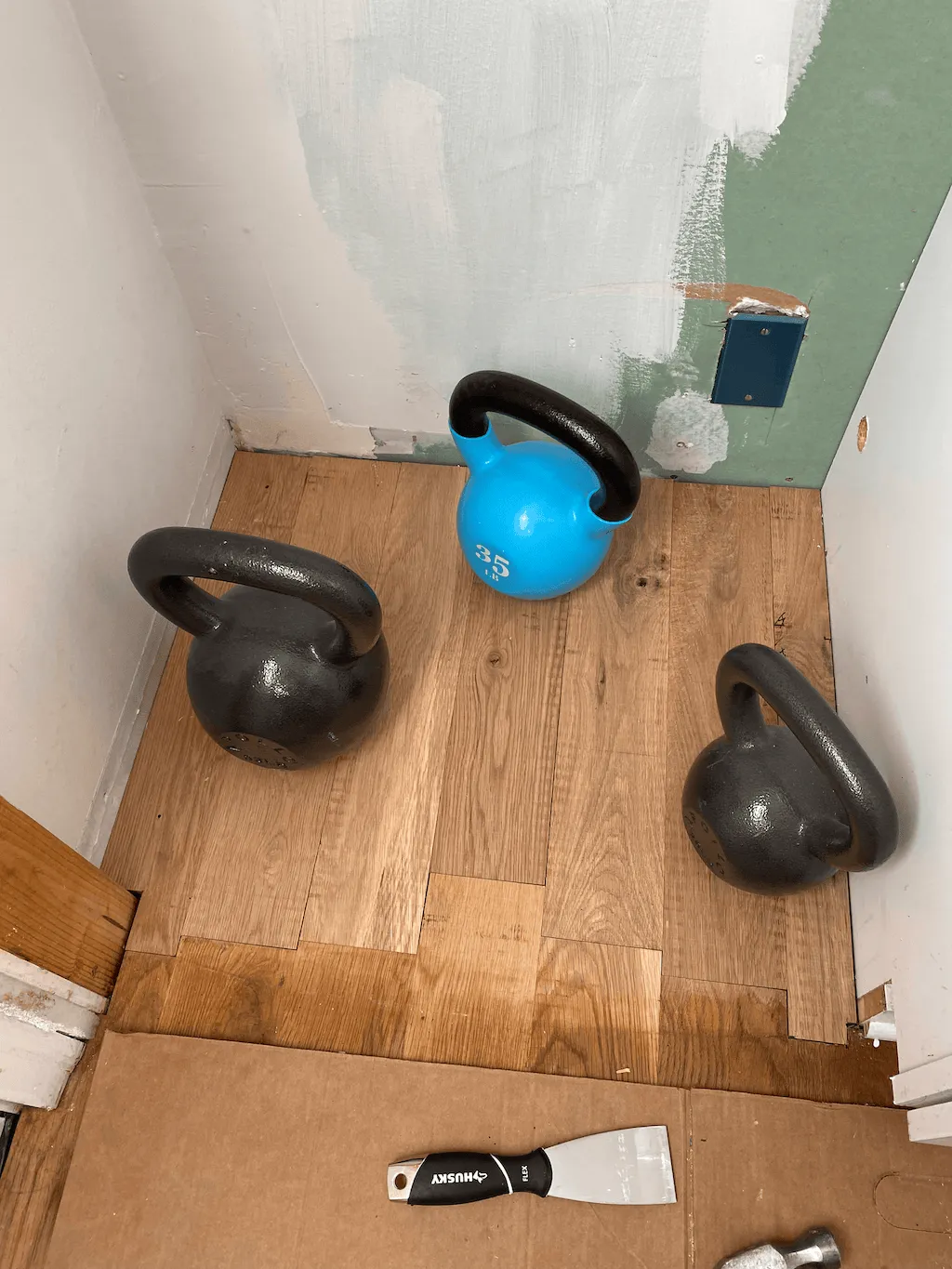
I ran into a few unexpected issues along the way. Evidently some moisture had made its way behind the old dishwasher at some point, leading to a lovely colony of black mold on the wall that I had to remediate. The nice oak hardwood flooring that prior owners installed throughout the house didn't extend into the dishwasher alcove, so I had to glue some leftover pieces in place (temporarily weighed down by some handy kettlebells). But, that raised the top surface of the dishwasher above the height of the cabinets, which required vertical wood spacers to bring everything to the same horizontal plane.
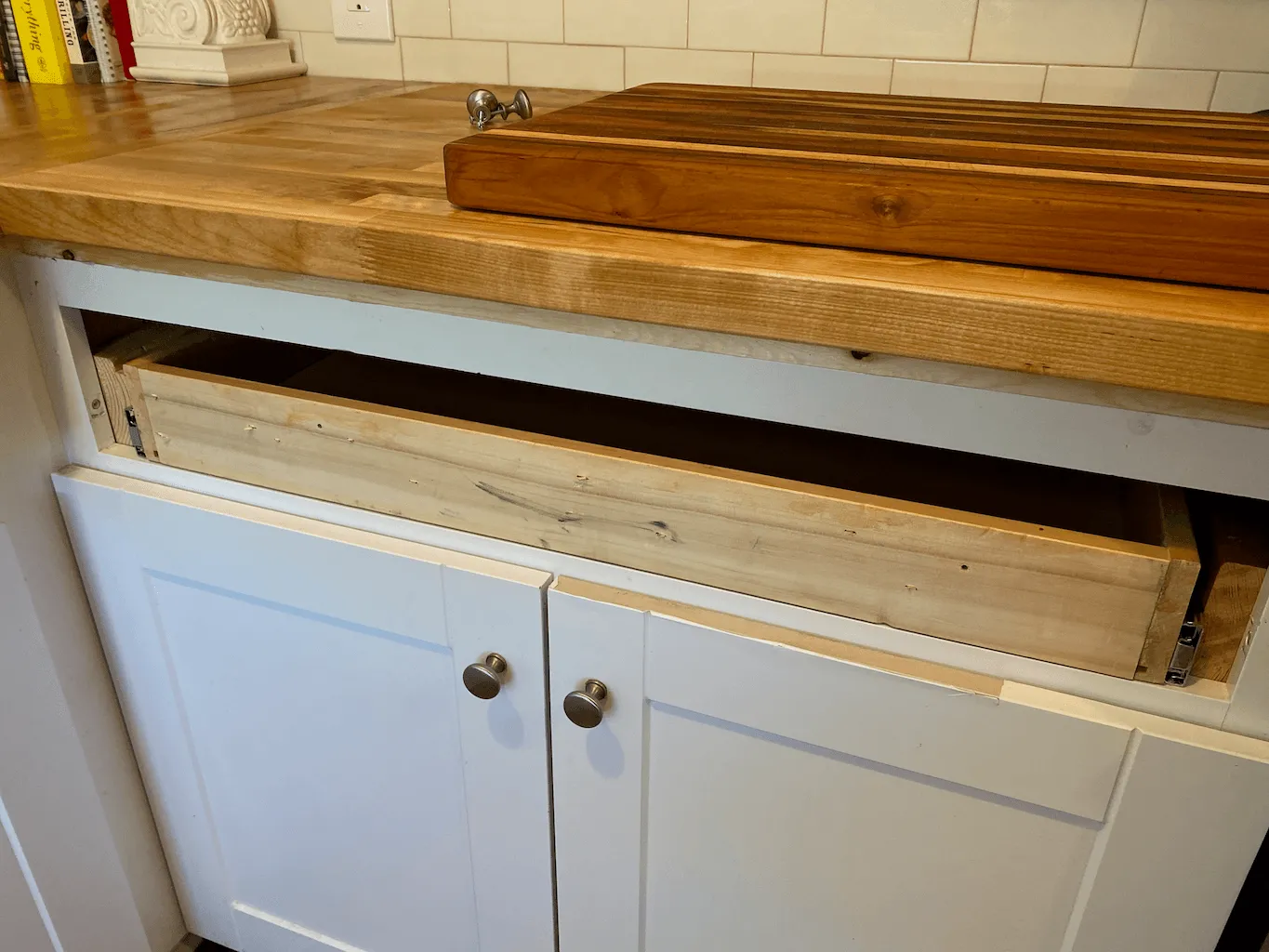
After I got everything installed and the surfaces finished, I ran into one other hurdle... the apron of the new sink extended far enough that it blocked my utensil drawer! I didn't realize this until after installing the sink, so I had to creatively disassemble the drawer in place, with all of its contents, before remaking it a bit narrower to fit.
Overall, I'm very happy with how it turned out. If I were to do it again, the main thing I would do differently would be to join the two pieces of the L using a 45° miter joint rather than a butt joint. The joint is a bit more visible than I'd like.